Add Text to Video: Kinetic Typography, Titles and Text Animations
To add text to a video with AI, upload it to Valmera and describe what you want: “a lower third with my name at the start” or “animate my key phrases on screen as I say them.” The agent places designed titles, lower thirds and callouts, or choreographs kinetic typography that appears on the instant each phrase is spoken, in the clear space beside the speaker.
Every element is editable text with its own timing and motion, from named entrances to keyframed paths, so revisions are one sentence each.
Put Words on Screen by Describing Them
Upload, describe the text, review the preview. Creating an account and uploading are free; editing requires a subscription.
Create an account →How to Add Text and Kinetic Typography in Valmera
- 1Upload and cut firstMP4, MOV, M4V, MKV or WebM, up to 14 GB and 3 hours. Make your cuts before adding text so every title lands on the final timing.
- 2Pick the treatmentA designed title or lower third for names and labels, kinetic typography for spoken phrases, a title card to break chapters.
- 3Give the exact words and momentQuote the text and say when: “from 0:32 to 0:35” or “when I say ‘pricing’.” Add font, color, position or motion if you have a preference.
- 4Review the frames, then exportThe agent renders a preview and checks the text against faces, captions and the frame edge. Adjust in plain English and export a full-resolution MP4.
Add a lower third reading “Sara Chen — Product Lead” for the first four seconds.Animate my key phrases on screen as I say them, beside my head.Build the line “less editing, more making” word by word as I say it, with “more making” in serif italic.Put a big “10x” on screen from 0:32 to 0:35 with a pop entrance.Slide the title in from the left, hold it, then drift it up and fade it out.Planning several text items? Download the on-screen text brief to note wording, timing and style for each.
Text and Motion Graphics You Can Ask For
| Treatment | What it does | Ask for |
|---|---|---|
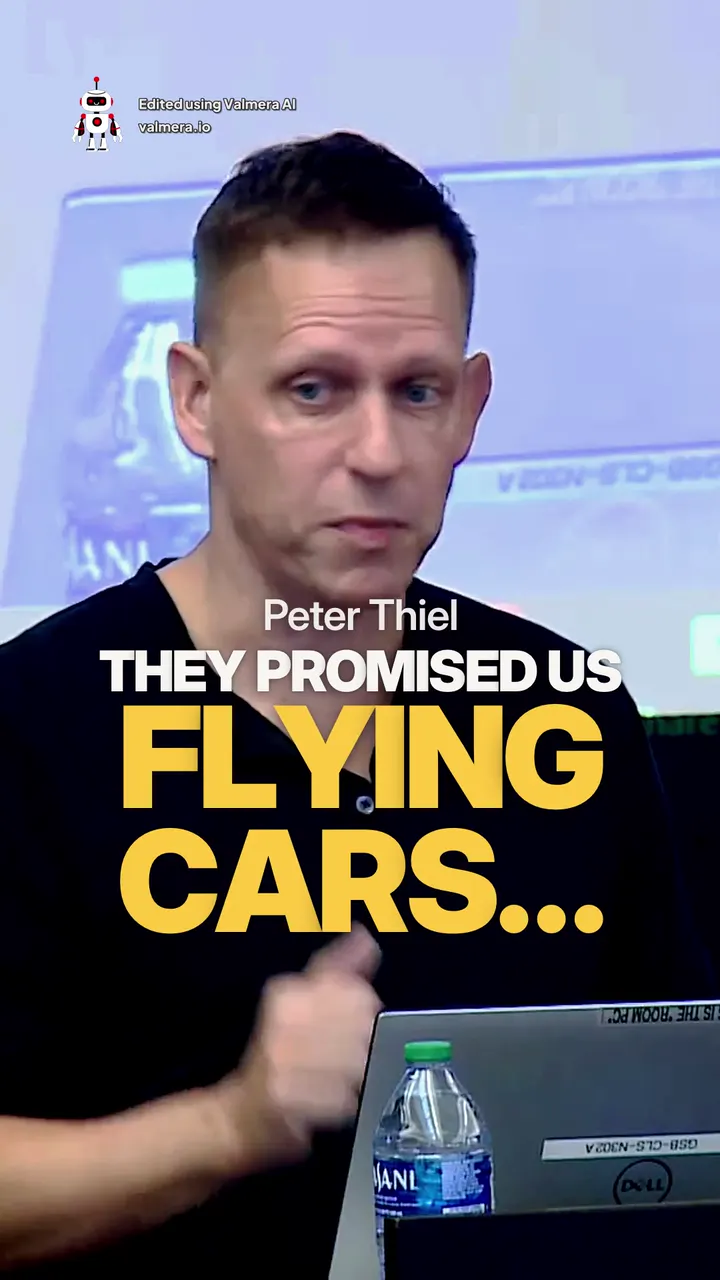
| Titles and templates | Title, subtitle line, lower third, callout, big number, quote and chapter marker | “A lower third with my name at the start.” |
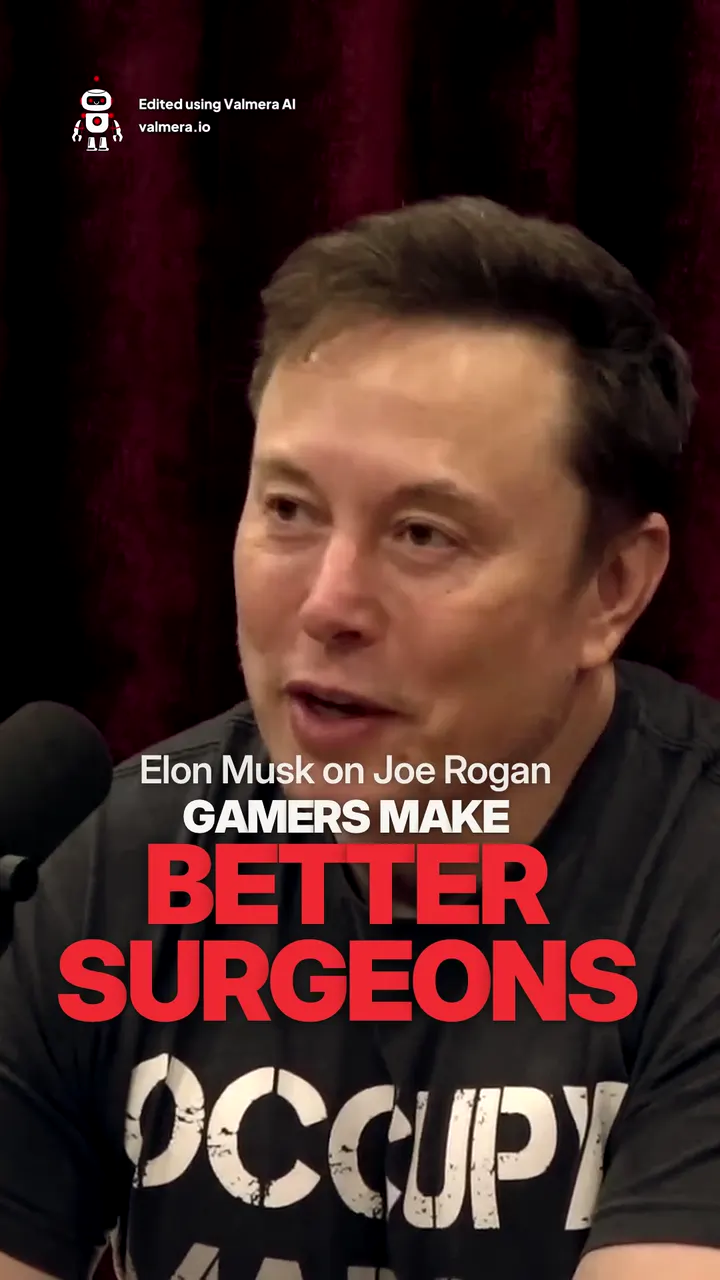
| Kinetic typography | Spoken phrases appear on the instant they are said, in the empty space beside the speaker, alternating sides | “Animate my key phrases as I say them.” |
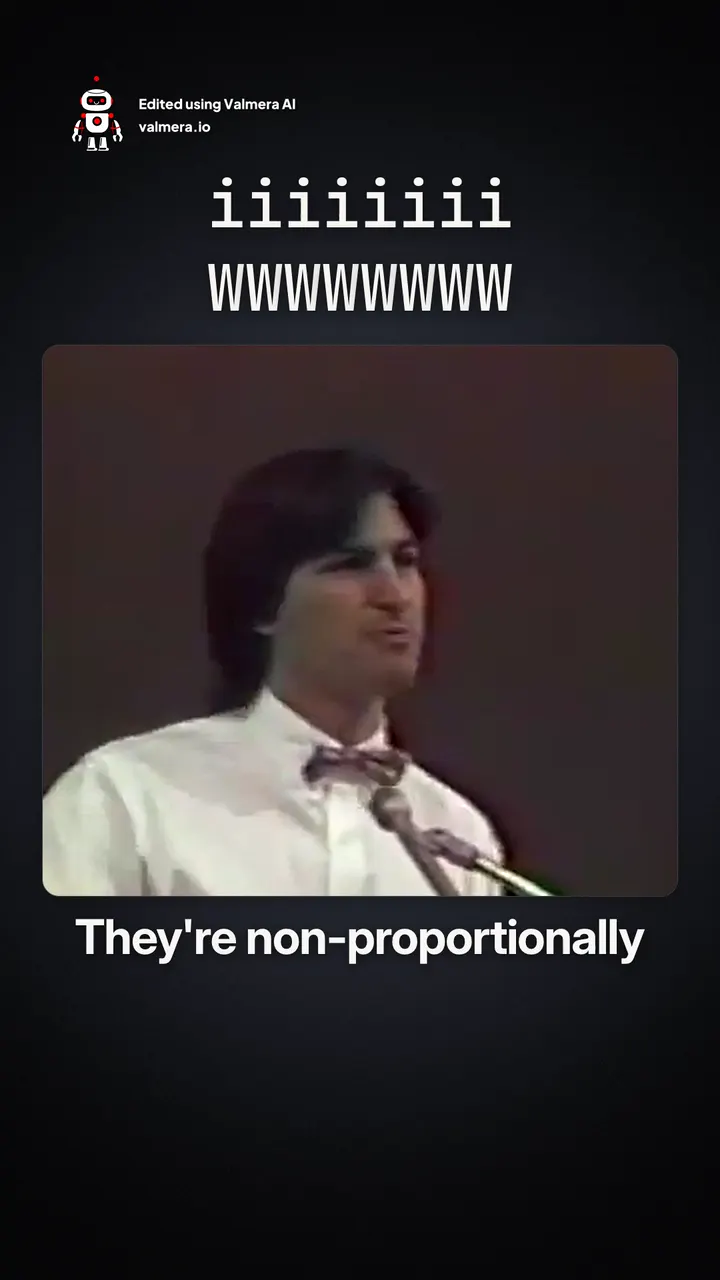
| Typography scenes | One phrase in mixed fonts, built word by word on speech cues, up to six lines | “Build ‘less editing, more making’ as I say it.” |
| Keyframed motion | Position, scale, rotation and opacity curves with easing on any text item | “Drift up slowly and fade out.” |
| Title cards | A full-screen card spliced into the video, then back to the footage | “A black title card saying ‘Chapter Two’ at 1:10.” |
| Vector graphics | Panels, underlines, arrows, rings and progress bars that share the text's motion | “Circle the Export button with a ring.” |
| Freeze frame with text | The picture holds, softens and darkens behind big centered words | “Freeze on 2:05 with ‘Day One’ over it.” |
How Kinetic Typography Works in Valmera
Kinetic typography is text that moves in time with speech. Valmera builds it from the word-level transcript, so there is no manual keyframing: ask for it over a range or the whole video and each phrase appears at the instant it is spoken, placed in measured empty space around the speaker (above, below or to the sides), and holds until the next phrase replaces it. Emphasis words get the accent color, a size bump and a pop.
The default motion is one restrained settle across the whole passage, with a controlled overshoot saved for emphasis, so it reads as choreography rather than a roulette of effects. Ask for “still” when cutting carries the energy. For a single designed line, a typography scene mixes fonts (a bold sans with a serif-italic accent, say) and builds it word by word on the spoken cues; earlier words never jump as later ones arrive. Each phrase is an ordinary text item you can restyle, retime or remove.
Settings That Matter
| Setting | Default | How to change it |
|---|---|---|
| Position | The template's default, in clear space | “Top left,” “beside my head,” or an exact spot. |
| Size | Set by the template | “Bigger,” or a scale from 0.4x to 3x. |
| Font | Set by the template | Inter Display, Anton, Bebas Neue, Archivo Black, Poppins Black, Syne, Playfair Display, Instrument Serif, DM Serif Display, Montserrat or Plus Jakarta Sans. |
| Color and backing | Template colors | Text and accent colors, a backing panel, outline and shadow. |
| Entrance and exit | Set by the template | Fade, pop, slide up, blur in, whip, rise, drop, elastic, bounce, swing, zoom blur, typewriter (entrance only) or none. |
| Timing | Where you place it in the edited video | “From 0:32 to 0:35,” or “when I say ‘pricing’.” |
| Captions underneath | Hidden while the text is on screen | “Keep the captions visible under the label.” |
Common Mistakes
- A different style for every title. One type system per video. Mixed templates with unrelated motion read like a slide deck.
- Text over a face. Put words in the clear space (sky, wall, the side of the frame). The agent checks this; say so if a frame still collides.
- Too little reading time. Watch when the last word appears, not when the animation starts. Shorten the line or extend the window.
- Kinetic text on every minute of a long video. It shines in hooks and short-form; on a 20-minute lesson, plain captions are easier to follow.
Limits
Fonts come from the bundled set; custom font uploads are not supported. Each text element holds up to 200 characters. Text does not track moving objects, though it can follow any path you describe. Text is burned into the export, so changes after download mean exporting again from the project.
Related Tools
For words behind a person, see text behind the subject. For the spoken words themselves, use captions or animated word-by-word captions. Pair text with zooms and sound effects for a produced finish. See the TikTok creators, YouTubers, podcasters (lower thirds for guests) and SaaS demos workflows, the text and overlays docs, or the AI video editor tour.
Over Valmera's MCP server, these are add_text, add_kinetic_text, set_typography_scene, set_text_motion, add_title_card and add_vector_graphic.
Frequently Asked Questions
Made with Valmera: real exports
Bring Your Footage and Your Words
Titles, lower thirds and kinetic typography from a sentence. Creating an account and uploading are free; editing requires a subscription.
Create an account →